University of Tennessee in Chattanooga - Spring 2023
Christopher Harmon, Thomas Clemmons, Tahj Taylor, Nate Hawkins, Deimer Ordonez Gomez, John Lazenby
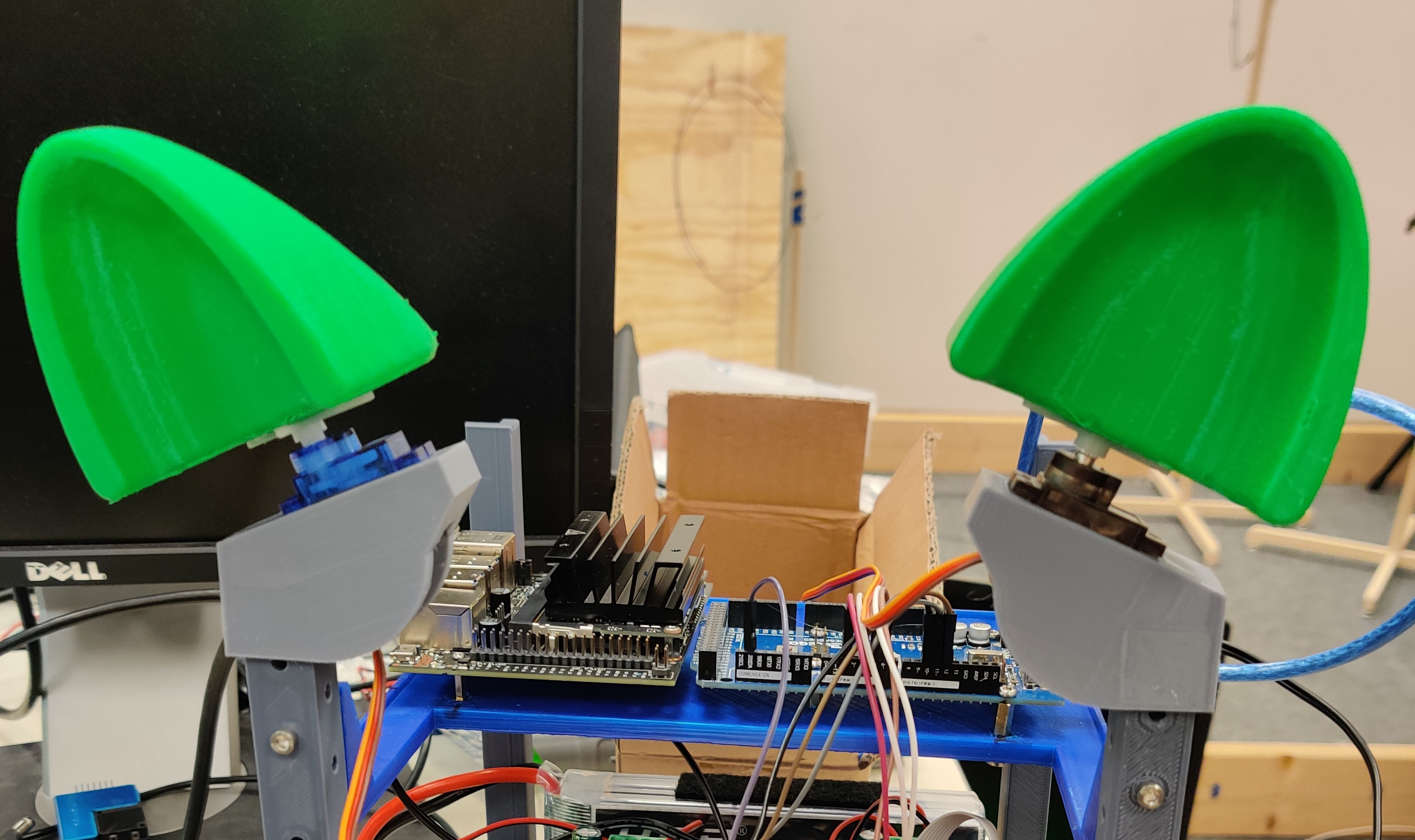
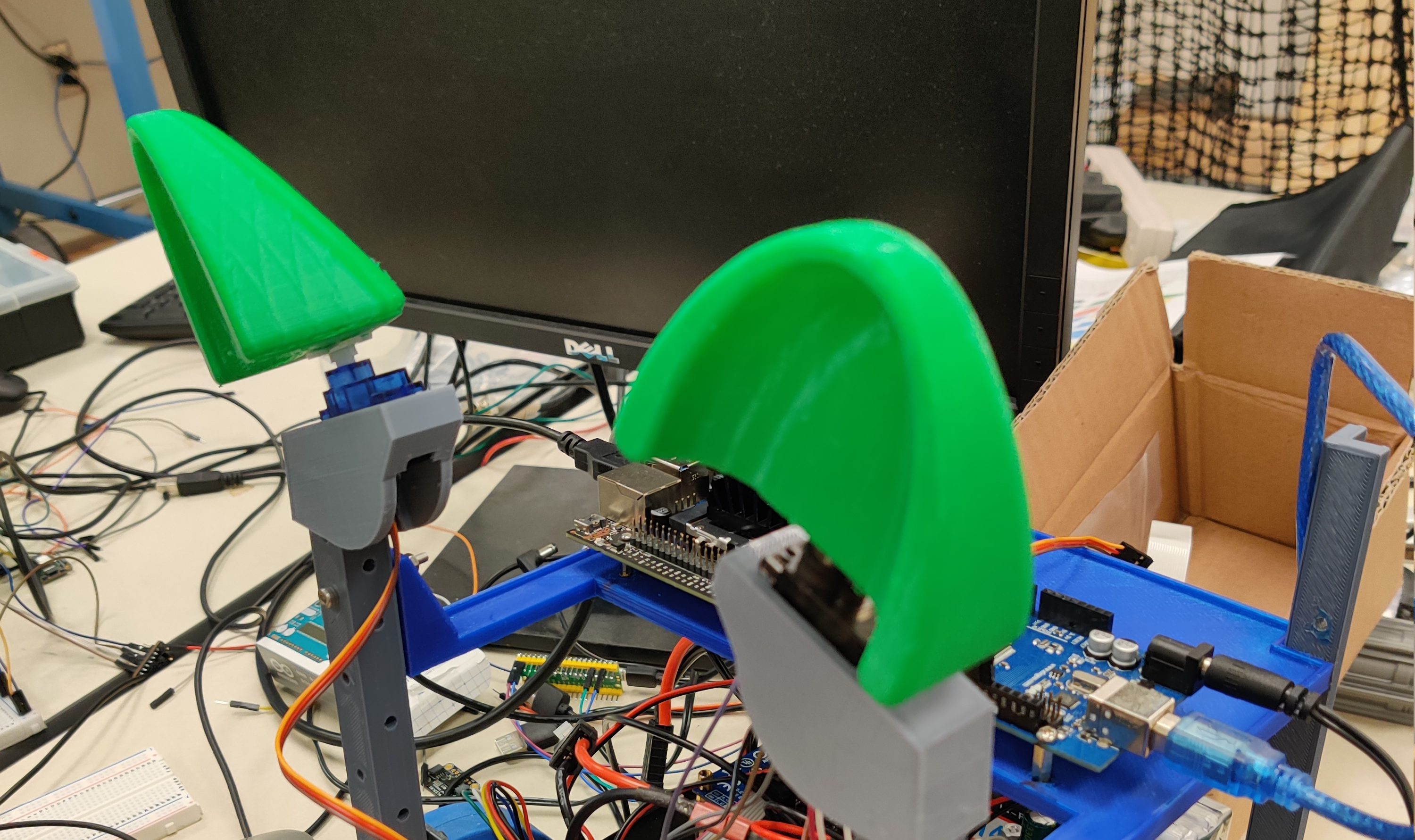
The use of animal-inspired design features in robotics is a growing trend in the industry, as engineers and designers seek to create machines that are more relatable and approachable for humans. One such design feature that has gained popularity in recent years is the addition of animal ears to robots. This not only adds an element of cuteness and charm to the robot, but it also serves a practical purpose - to provide a visual indicator of the robot's current process or state.
In the case of our robot, CATNAV, we have incorporated servo-actuated cat ears into the design to serve as a visual indicator of the robot's current process. The movement of the ears will correspond to different functions that the robot is performing, allowing users to easily understand what the robot is doing at any given moment. This will make the robot more intuitive and user-friendly, as it will eliminate the need for complicated screens or displays that might be difficult for some users to understand.
>
Furthermore, the addition of cat ears to our robot also has a psychological benefit. Humans tend to trust robots that have more human-like features, such as eyes, facial expressions, and now, even animal ears. By adding these features to our robot, we are increasing the perceived trustworthiness of the machine and making it more approachable for users. This is especially important in applications where the robot will be working alongside humans, as it will help to foster a more collaborative and positive working environment.
>
Another benefit of the CATNAV's design is its appeal to children. Children are often fascinated by robots, and the addition of cute and playful features, such as cat ears, can make the robot even more appealing and engaging to younger users. This can be especially beneficial in educational settings, where robots are used to teach children about science, technology, engineering, and math (STEM) concepts. By making the robot more attractive and interesting to children, we can encourage more kids to become interested in robotics and STEM fields, which could have a positive impact on their future career choices.
>
Overall, the addition of cat ears to our robot, CATNAV, serves both a practical and a appealing purpose. By incorporating these playful design features into the machine, we are making it more intuitive and user-friendly, while its cuteness and appeal to children can help to encourage interest in robotics and STEM fields. As the field of robotics continues to evolve, we can expect to see more creative and innovative design features that make these machines even more relatable and human-like.